
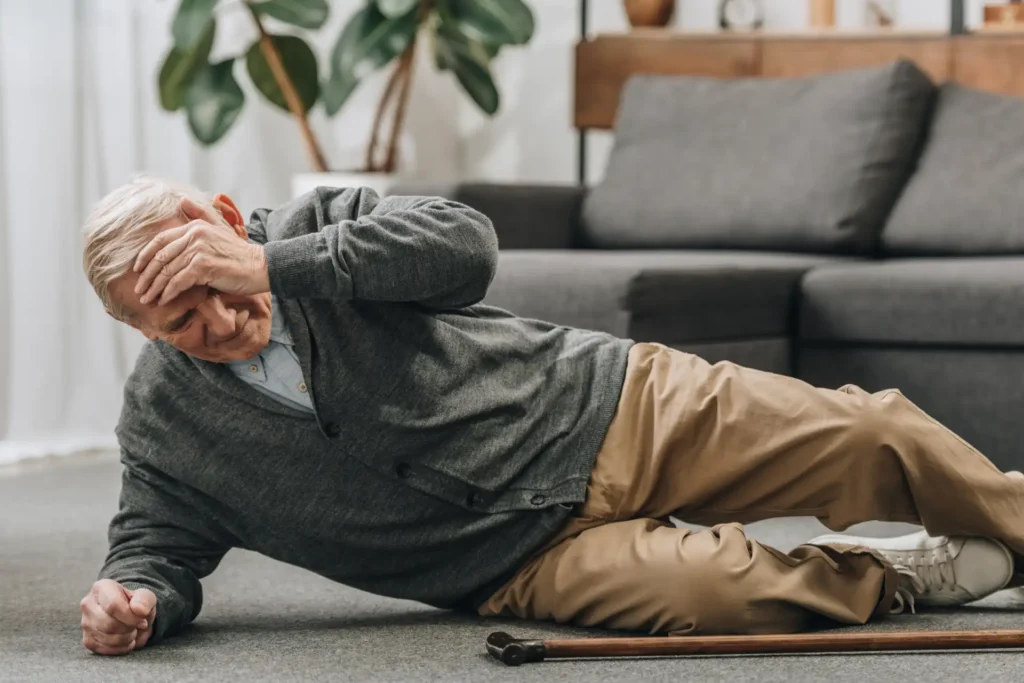
As we celebrate our birthdays and move into our golden years, maintaining our independence becomes one of our highest priorities. We want to continue living in our own homes, working in our gardens, shopping independently, and playing actively on the floor with our grandchildren.
But for many active older adults, there is a quiet, underlying worry that begins to shadow their daily routine: the fear of falling. You might notice that you feel a little unsteady when stepping off a curb, find yourself touching walls or furniture for balance as you walk down a hallway, or feel a brief wave of lightheadedness when standing up quickly from a chair.
Developing a fear of falling is completely understandable, but changing your lifestyle to avoid movement is one of the worst things you can do. Falling is not an inevitable, natural part of getting older. Balance is a physical skill that can be practiced, trained, and significantly improved at any age. Let’s look at how your body stays upright, why balance can slip over time, and how physical therapy can help you build a bulletproof foundation so you can live with total confidence.
The Three Pillars of Balance: Your Body’s Internal Team
To understand how to prevent falls, we have to look at how your brain keeps you steady. Balance isn’t just controlled by your legs; it relies on a constant conversation between three completely separate sensory systems in your body:
-
Your Eyes (The Visual System): Your eyes tell your brain where your body is located in relation to the floor, walls, and objects around you.
-
Your Inner Ear Canals (The Vestibular System): As we learned in vertigo care, your inner ear loops act as your body’s internal GPS, sensing every time your head tilts, accelerates, or turns.
-
Your Sensory Nerves (Proprioception): You have millions of tiny, specialized nerve endings in your ankles, the soles of your feet, and your joints. They act like pressure pads, instantly telling your brain exactly what kind of surface you are standing on (e.g., hard hardwood, soft carpet, or uneven grass) and how your body weight is distributed.
Your brain continuously collects data from all three pillars, blends it together, and automatically tells your leg and core muscles how to react so you stay standing. As we age, if any of these three pillars slow down—due to changes in vision, inner ear shifts, or decreased nerve sensitivity in the feet—your balance can become unsteady.
The Dangerous Fear-Avoidance Cycle of Falling
When someone experiences a close call—like a slip on an icy patch or a trip over a rug—or suffers a minor fall, they naturally develop a high level of anxiety about it happening again. To protect themselves, they often enter a frustrating physical cycle.
To avoid a fall, an individual might start staying home more often, stop taking walks, and avoid navigating stairs or uneven terrain altogether. But when you limit your physical activity, your leg muscles quickly lose strength, your joints stiffen up, and your brain stops practicing its balance skills.
Ironically, prolonged rest and inactivity make you significantly weaker, directly increasing your risk of experiencing a real fall. Physical therapy breaks this dangerous cycle by giving you a safe, structured environment to rebuild your physical capacity without fear.
How Physical Therapy Builds a Stronger Foundation
A specialized fall-prevention physical therapy program does not use a “one-size-fits-all” exercise sheet. Your therapist will evaluate your vision tracking, check your inner ear function, test the sensation in your feet, and assess your leg strength to pinpoint your exact balance vulnerabilities:
Strengthening the “Powerhouse” Muscle Groups
To catch yourself during a trip, you need rapid, reactive strength in your lower body. We focus heavily on strengthening your quadriceps (thighs), glutes (hips), and dorsiflexors (the muscles on the front of your shins that lift your toes). Exercises like controlled chair rises, step-ups, and standing hip extensions ensure that your legs have the physical power to safely support your weight and react instantly if you lose your footing.
Sensory Retraining (Challenging the Pillars)
We will teach your brain how to cope if one of your balance pillars is compromised. Your therapist will guide you through exercises where you practice standing on an uneven foam pad (challenging your foot nerves) or closing your eyes for a few seconds while standing in a safe corner (forcing your inner ear to take over). By gently challenging your balance system in a controlled clinic environment, your brain learns to process sensory data much faster, making real-world surfaces like gravel, grass, or dark rooms feel effortless to navigate.
Reaction and Agility Training
True fall prevention means learning how to handle unexpected changes. Your therapist will introduce fun, safe, dynamic challenges—such as walking while turning your head from side to side, stepping over small foam obstacles, or practicing a safe “stepping strategy” to recover your footing if you are gently nudged. This bridges the gap between basic strength and real-world safety.
Conclusion
You do not have to let the fear of falling dictate your lifestyle or force you to give up the activities that bring joy to your days. Your body is incredibly resilient, and your balance system can be sharpened, strengthened, and restored with the right professional guidance. By committing to a targeted fall prevention program, you can build a stable foundation, reclaim your physical confidence, and protect your precious independence for years to come.
PT Pros has fifteen clinic locations throughout Kentucky. Find a clinic location near you: Barbourville, KY • Columbia, KY • Corbin, KY • Danville, KY • Elizabethtown, KY • Eminence, KY • Greensburg, KY • Harlan, KY • Hazard, KY • Leitchfield, KY • Lexington, KY • London, KY • Louisville, KY • Somerset, KY • Williamsburg, KY