
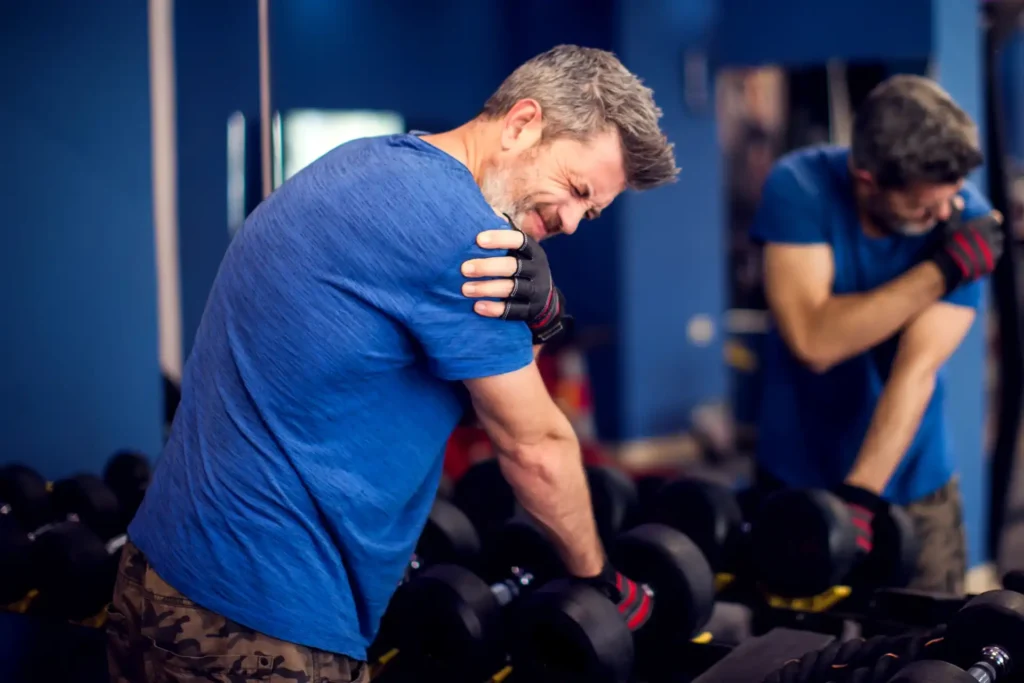
It usually starts with a simple, everyday movement. You reach into the backseat of your car to grab a grocery bag, lift a heavy box onto a high shelf, or try to sleep on your side at night, and suddenly—a sharp, deep ache bites into your shoulder.
When shoulder pain sticks around and makes it hard to brush your hair, put on a jacket, or reach behind your back, it is incredibly common to worry that you have sustained a severe structural tear. The phrase “rotator cuff tear” sounds intimidating, and many people automatically assume it means they are headed straight for an operating room.
But here is a major piece of comforting news backed by years of orthopedic research: Having a rotator cuff tear or strain does not automatically mean you need surgery. The shoulder is one of the most adaptable joints in the entire body. With a structured, patient-first physical therapy plan, you can train your shoulder to heal, adapt, and move completely pain-free without a single stitch.
Let’s look at how the rotator cuff actually works, how to spot the signs of an injury, and how physical therapy can help you recover safely without surgery.
What is the Rotator Cuff? The Golf Ball on a Tee Analogy
To understand why shoulder injuries happen, it helps to visualize how your shoulder is built. Your shoulder is a ball-and-socket joint, but it is built very differently than your deep, stable hip joint.
Think of your shoulder socket like a flat golf tee, and the top of your arm bone (the humerus) like a golf ball sitting on top of it. Because the socket is so shallow, your arm has an incredible amount of freedom to move in almost any direction.
However, because the bone structure is inherently unstable, the joint relies completely on a team of four small, highly specialized muscles to keep it safe. This team is the rotator cuff. These muscles wrap securely over the top of the “golf ball” like a hand holding it firmly down against the “tee.” Every time you lift, twist, or reach your arm, your rotator cuff muscles must squeeze in perfect harmony to keep the joint centered and moving smoothly.
How Do I Know if My Rotator Cuff is Injured?
Rotator cuff issues usually fall into two main categories: rotator cuff tendonitis/impingement (where the muscles are inflamed and pinched) or an actual rotator cuff tear (where the tendon tissue has frayed or separated).
If your rotator cuff is struggling, your body will usually give you a few very specific warning signs:
-
The “Arc” of Pain: Your shoulder feels fine when your arm is down by your side, and fine when it is all the way up by your ear, but it hurts intensely when your arm is out to the side at a 90-degree angle (halfway up).
-
Night Pain: Sleeping directly on the injured shoulder causes a deep, throbbing ache that can easily wake you from a sound sleep.
-
Weakness When Reaching: You feel a distinct weakness or a sharp catch of pain when trying to lift everyday objects, like a coffee mug or a gallon of milk, out in front of you.
-
Difficulty Reaching Behind Your Back: Tying an apron, tucking in a shirt, or reaching for your wallet triggers a sharp stiffness or restriction.
The Hidden Science: Why You Can Live Pain-Free with a Tear
If an MRI report shows that you have a partial or even a full rotator cuff tear, it is completely normal to feel overwhelmed. But an incredible amount of medical research shows that many people live fully active lives with rotator cuff tears and have absolutely zero pain.
As we age, our tendons experience natural “wrinkles on the inside,” just like our skin and knees. A large medical study looked at the shoulders of completely healthy adults over the age of 60 who had zero shoulder pain or limitations. They found that over 50% of them actually had hidden rotator cuff tears that they didn’t even know existed!
Your shoulder joint is supported by several other massive, powerhouse muscles—including your deltoids, biceps, and the muscles surrounding your shoulder blade (scapula). If a small piece of your rotator cuff is frayed or torn, physical therapy teaches the neighboring muscles to step up, take over the load, and safely compensate for the injury. By building a bulletproof support team around the joint, you can completely eliminate your pain and regain 100% of your function without ever touching a scalpel.
How Physical Therapy Restores Your Shoulder
A dedicated round of specialized physical therapy resolves shoulder pain by treating the entire mechanical system, rather than just focusing on the tear:
1. Clearing the Traffic Jam (Opening the Space)
When your rotator cuff is inflamed, it swells up and gets pinched underneath a bony roof at the top of your shoulder every time you raise your arm. This is called impingement. Your therapist will use gentle, hands-on manual therapy techniques to help the joint glide downward, instantly opening up the space under the bone and clearing the mechanical traffic jam so your arm can move without pinching.
2. Training the Shoulder Blade (The Foundation)
Your shoulder blade is the foundation for your entire arm. If your shoulder blade doesn’t move properly when you reach up, your rotator cuff is forced to work twice as hard, leading to fraying and injury. We will teach you targeted exercises to strengthen your lower trapezius and serratus anterior muscles—the anchors that control your shoulder blade. A steady foundation creates an effortless lift.
3. Rebuilding Rotator Cuff Endurance
We don’t use heavy weights to train the rotator cuff. Because these are small, stabilizing muscles, they respond best to light, controlled, high-repetition movements using resistance bands and light weights. We will train your shoulder to fire automatically and maintain its endurance, keeping the “golf ball perfectly centered on the tee” throughout your entire day.
Conclusion
Shoulder pain can make simple daily tasks feel incredibly daunting, but your body is remarkably resilient and highly capable of adapting. A rotator cuff tear is not a permanent sentence for surgery. By committing to an evidence-based physical therapy plan, you can calm the inflammation, train your surrounding muscles to protect the joint, and return to your daily life with a strong, pain-free shoulder.
PT Pros has fifteen clinic locations throughout Kentucky. Find a clinic location near you: Barbourville, KY • Columbia, KY • Corbin, KY • Danville, KY • Elizabethtown, KY • Eminence, KY • Greensburg, KY • Harlan, KY • Hazard, KY • Leitchfield, KY • Lexington, KY • London, KY • Louisville, KY • Somerset, KY • Williamsburg, KY